Decoding the effects of back-to-back scheduling on player output in basketball and horse stamina in consecutive days
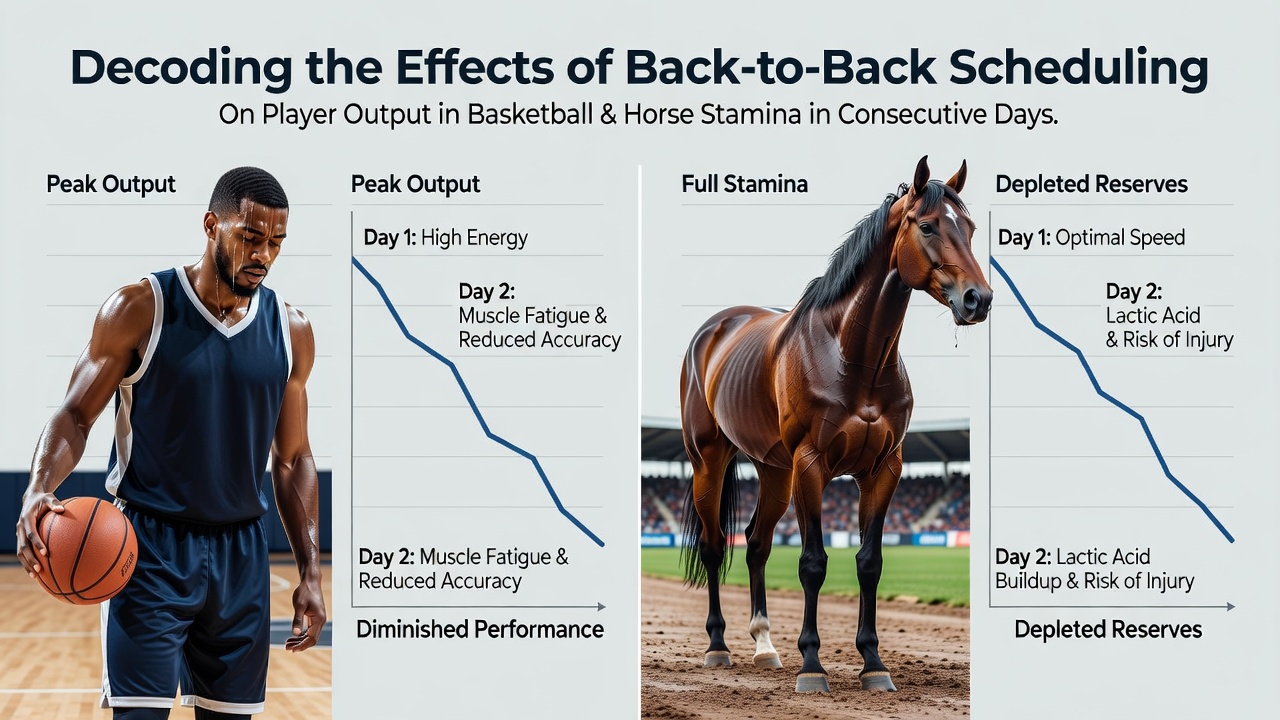
Back-to-back scheduling creates measurable demands on both basketball players and racehorses, with performance data revealing consistent patterns across professional leagues and thoroughbred circuits. Researchers track metrics such as points scored, rebound rates, and shooting percentages in basketball alongside speed figures, recovery times, and finishing positions in horse racing to quantify these effects. Studies from sports science programs show that consecutive contests reduce output in specific ways that vary by sport yet share common physiological roots.
Basketball Player Output Under Consecutive Game Loads
League schedules place teams in back-to-back situations multiple times each season, and data collected by the NBA and university research groups documents declines in key performance indicators. Players average fewer minutes played effectively when games occur on successive nights, with shooting efficiency dropping between three and seven percentage points according to aggregated box score analyses. Recovery markers including heart rate variability and muscle soreness indicators rise noticeably after the second contest, and those patterns hold across position groups though guards often exhibit sharper reductions in assist-to-turnover ratios.
Training staff monitor load through wearable technology, and results indicate that total distance covered decreases while defensive metrics such as steals and blocks show mixed responses depending on rest intervals between games. One study tracking collegiate athletes found that teams playing two games in under twenty-four hours recorded lower field goal percentages in the second outing, particularly from beyond the arc, while rebounding numbers remained relatively stable when frontcourt depth allowed rotation adjustments.
Horse Stamina Across Successive Racing Days
Thoroughbred racing calendars schedule horses for starts on consecutive or near-consecutive days during certain meets, and performance records from bodies such as Racing Australia and the Jockey Club illustrate stamina-related shifts. Speed ratings decline in second starts when horses return within forty-eight hours, with the drop most pronounced in longer distances where aerobic demands increase. Trainers adjust training regimens based on post-race bloodwork showing elevated lactate levels that require additional recovery windows before peak efforts return.
Observers note that younger horses and those with higher baseline fitness maintain better finishing times across back-to-back entries, whereas older competitors display clearer fatigue signals in the final furlongs of the follow-up race. Track surface conditions interact with these patterns, and data from multiple jurisdictions indicates that turf races produce different recovery profiles compared with dirt or synthetic surfaces when horses race on successive days.
Comparative Patterns Across the Two Sports
Both basketball and horse racing demonstrate that cumulative fatigue compounds when rest periods fall below certain thresholds, though the timelines differ because of the distinct physical demands. In basketball the critical window centers on twenty-four to forty-eight hours between tip-offs, while horse racing recovery curves extend further when races exceed sprint distances. Physiological monitoring reveals overlapping markers such as elevated cortisol and reduced glycogen stores that affect output in both domains.
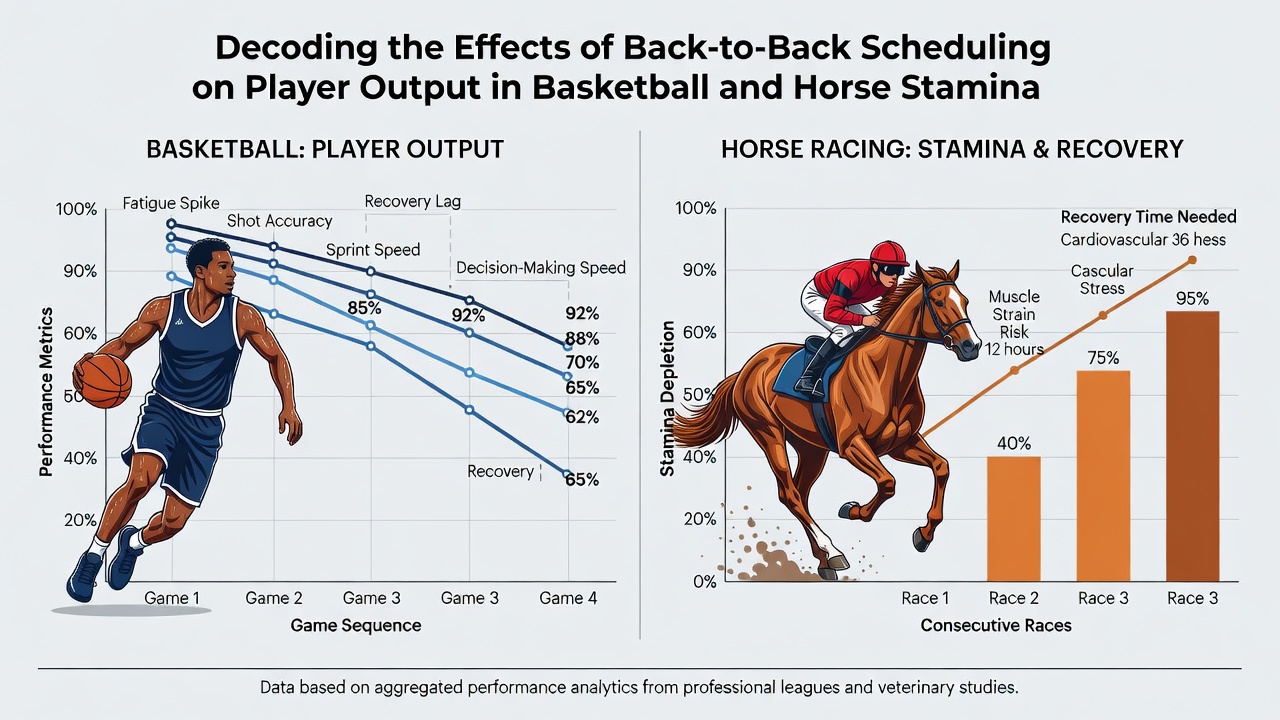
Coaches and conditioners apply similar strategies including targeted nutrition and active recovery protocols to mitigate declines. Research published through the American College of Sports Medicine and parallel equine veterinary studies highlights that individualized monitoring yields better maintenance of output than uniform rest policies. Teams and racing stables that track individual responses rather than applying blanket rules record smaller performance drops during compressed schedules.
July 2026 Scheduling Context
July 2026 features several basketball events including summer league play and international tournaments that place athletes in back-to-back formats, while horse racing circuits run mid-summer festivals with horses entered across multiple days. Performance databases compiled during these periods will add to existing longitudinal data sets, allowing analysts to compare outcomes against historical benchmarks from prior seasons. Regulatory bodies overseeing both sports require documentation of medical clearances and welfare checks that influence how schedules are constructed when consecutive contests appear on calendars.
Conclusion
Evidence gathered across professional and academic sources demonstrates that back-to-back demands produce predictable shifts in basketball player statistics and horse racing performance metrics. Continued collection of granular data supports refined scheduling practices that balance competitive requirements with recovery needs in both sports.