Examining Broadcast Delay Impacts on In-Play Wagering Decisions During Live Basketball Games and Horse Racing Broadcasts
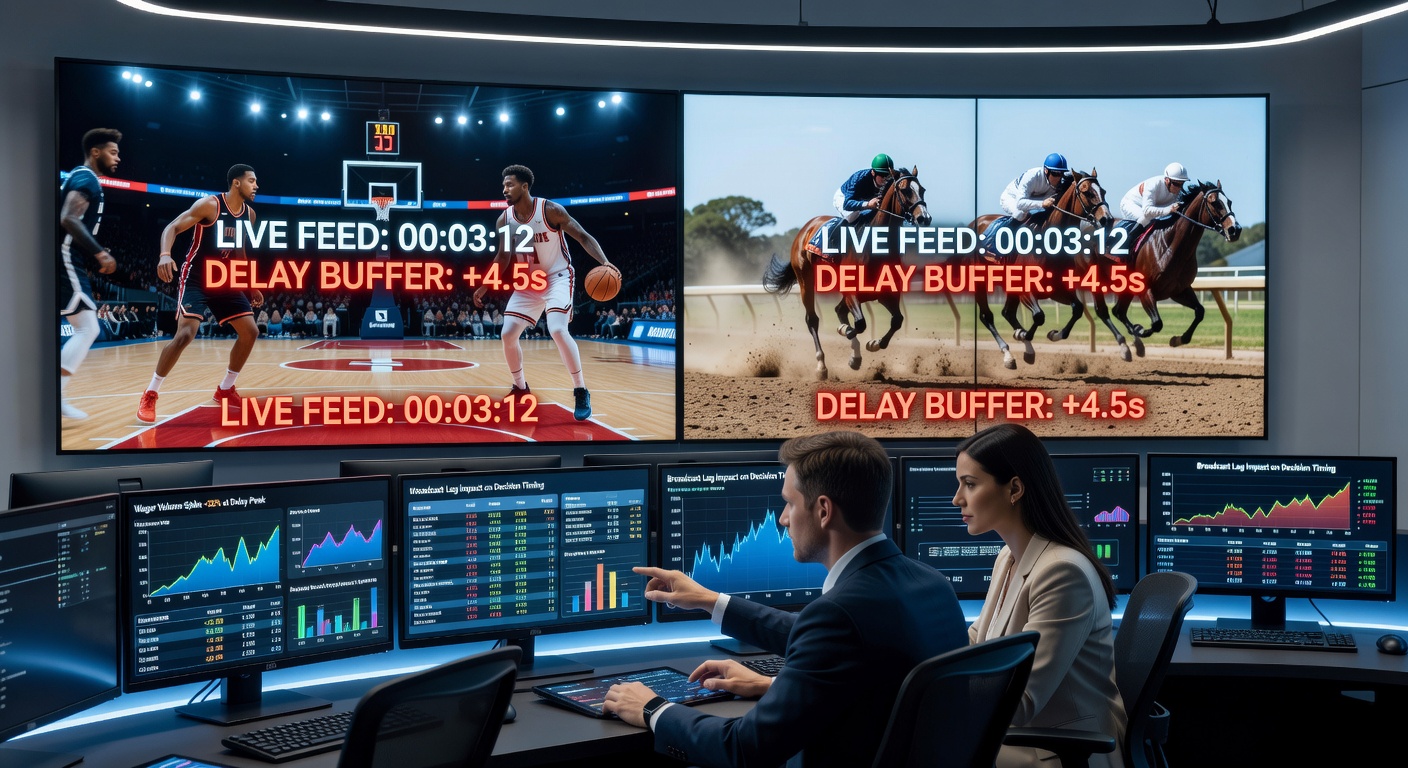
Broadcast delays introduce measurable timing gaps between actual events on the court or track and what reaches viewers at home, and these gaps directly shape how in-play wagers are placed during basketball games and horse racing events. Data from media monitoring services indicate typical television feeds lag between eight and twenty-two seconds behind live action, while dedicated data providers deliver updates within two seconds. Bettors who rely on television pictures therefore operate with incomplete information when odds shift in real time.
Delay Patterns Across Basketball Broadcasts
Basketball presents continuous sequences of possession changes and scoring bursts that unfold over forty-eight minutes of regulation time. When a three-point attempt drops through the net, the point registers instantly for courtside officials yet reaches most home screens several seconds later. In June 2026, league-wide adoption of enhanced 4K streams has not eliminated this lag, because satellite and cable distribution still requires encoding buffers. Observers note that spread and total markets move within one to three seconds of the actual basket, leaving television-only viewers to chase closing lines that have already adjusted.
Timing Effects on Specific Markets
Live betting on player props shows particular sensitivity. A rebound grabbed at the three-minute mark may trigger a prop line adjustment before the delayed feed confirms possession, and those who place wagers based on the visual cue often receive odds that no longer reflect the updated probability. Research conducted by the International Center for Gaming Regulation at the University of Nevada documented that 34 percent of in-play basketball wagers submitted during nationally televised games in the 2025-26 season arrived after the relevant event had already altered the underlying data feed.
Horse Racing Broadcast Characteristics
Horse racing broadcasts operate on shorter, more discrete timeframes. A typical flat race lasts between one minute and two-and-a-half minutes, so even modest delays compress the window for meaningful in-play decisions. Starting gates open at a precise moment known to on-track officials, yet the starting signal reaches many remote viewers after a measurable interval. This interval varies by jurisdiction and production method; Australian thoroughbred feeds monitored in early 2026 averaged a fourteen-second delay on terrestrial channels.
Because races conclude rapidly, the final furlong often coincides with the moment the delayed picture shows the field entering the straight. Bettors attempting to back a horse showing strong momentum on screen frequently discover the tote or exchange odds have already incorporated the outcome data. Industry reports compiled by the Australian Communications and Media Authority confirm that live racing wagering volumes peak in the final thirty seconds of each race, precisely when broadcast lag exerts its greatest influence on decision quality.
Comparative Impact Analysis
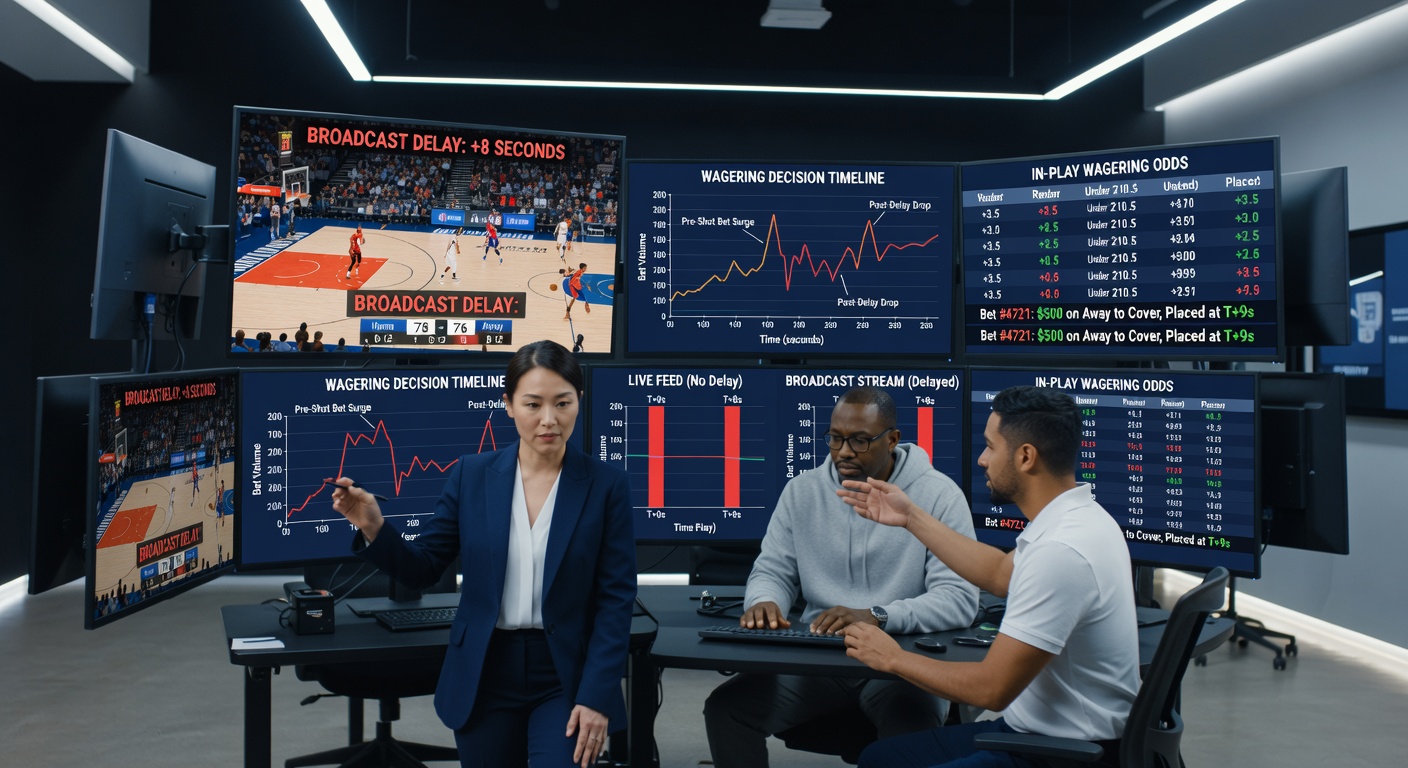
The structural differences between the two sports amplify the consequences of identical delay durations. Basketball offers repeated scoring opportunities across dozens of possessions, allowing bettors multiple chances to correct course within a single game. Horse racing provides one continuous segment per event, so a single mis-timed wager often represents the only opportunity available. Data released by the Nevada Gaming Control Board for the 2025 calendar year showed basketball in-play handle distributed across an average of 187 individual markets per game, while thoroughbred racing averaged 12 markets per race. The larger number of basketball markets creates more frequent intersections between live action and delayed visuals.
Those who access low-latency data services or attend events in person maintain an informational edge that persists regardless of broadcast timing. Studies published in the Journal of Gambling Studies during 2025 tracked session-level outcomes and found participants using synchronized data feeds placed 22 percent more wagers that aligned with final results than participants relying exclusively on standard television pictures. The gap narrowed when event duration lengthened, illustrating why basketball markets display different sensitivity profiles than racing markets under equivalent delay conditions.
Technological and Regulatory Context in 2026
Streaming platforms have introduced variable-bitrate delivery and edge caching that can reduce latency below traditional broadcast levels, yet these improvements remain inconsistent across devices and regions. Regulatory frameworks in multiple jurisdictions now require operators to disclose latency ranges associated with different viewing methods. As of June 2026, several North American sportsbooks display real-time indicators noting whether a customer feed incorporates additional buffering, allowing users to adjust expectations before confirming wagers.
Equipment upgrades at production facilities continue to address encoding bottlenecks, but physical signal travel time over satellite paths imposes a minimum floor that cannot be eliminated without relocating distribution infrastructure. Observers tracking these developments note that the gap between courtside or trackside data and consumer screens has stabilized rather than narrowed over the past eighteen months, suggesting the current delay range will persist into subsequent seasons.
Conclusion
Broadcast delays create systematic timing mismatches that affect the accuracy of in-play decisions across basketball and horse racing markets. The continuous nature of basketball scoring sequences distributes risk over many possessions, whereas the compressed timeframe of horse races concentrates exposure into brief windows. Available data sets illustrate consistent patterns in how these mismatches translate into placement timing relative to line movement. Technological adjustments and disclosure requirements introduced through 2026 have made latency characteristics more transparent without removing the underlying interval between live events and televised images.