Mapping Altitude Adjustments: How Elevation Shifts Recalibrate Endurance Metrics and Scoring Distributions in Highland Soccer Fixtures Alongside Mountain Circuit Races
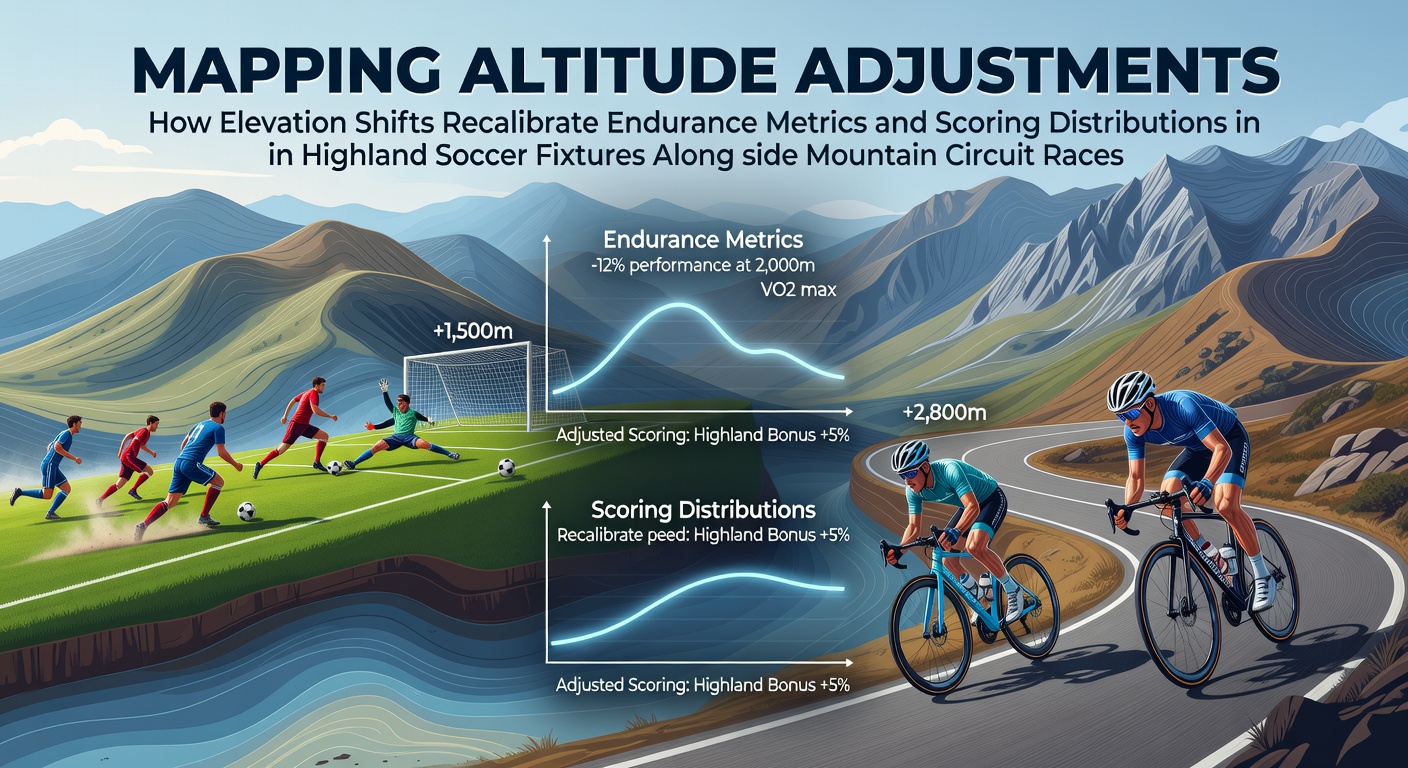
Altitude changes force measurable recalibrations across endurance metrics because lower oxygen availability reduces maximal oxygen uptake, which in turn alters pacing strategies and recovery intervals. Researchers have documented these shifts in both team sports played at high elevations and individual mountain circuit events, where data sets from performance tracking systems reveal consistent patterns in heart rate responses and lactate thresholds. Those who've studied highland soccer fixtures note that teams accustomed to sea-level conditions often see a drop in total distance covered per player once matches move above 2,000 meters, while mountain circuit racers experience parallel compression in their sustainable power outputs during prolonged climbs.
Physiological Recalibrations at Elevation
Lower air pressure reduces the partial pressure of oxygen, prompting the body to increase ventilation rates and red blood cell production over time. Studies from institutions such as the University of Calgary show that acute exposure without prior acclimatization can lower VO2 max by 7 to 10 percent for every 1,000 meters gained, forcing athletes to adjust effort distribution to avoid early fatigue. In soccer matches held in Andean venues, for example, midfielders record fewer high-intensity runs in the second half compared with equivalent fixtures at lower elevations, and similar patterns appear in mountain bike circuit races where power meter data indicate reduced peak wattage during repeated ascents.
Endurance Metrics in Highland Soccer
Highland soccer fixtures produce distinct distributions in key performance indicators because the thinner air accelerates fatigue in aerobic-dominant phases of play. GPS tracking from leagues operating in Bolivia and Ecuador demonstrates that average sprint distances decrease while recovery jog periods lengthen, creating a narrower window for pressing and transitional attacks. Observers note that goalkeepers and central defenders often maintain closer to baseline metrics since their roles involve less continuous running, whereas wingers and central midfielders exhibit the largest deviations in total player load. Scoring distributions shift accordingly, with fewer goals from open play and a relative increase in set-piece outcomes as teams conserve energy for organized restarts rather than sustained build-up sequences.
Scoring Patterns and Tactical Adjustments
Match data compiled across multiple seasons indicate that total goals per game drop by roughly 15 percent when fixtures occur above 2,500 meters, yet the proportion of headed goals rises because crosses become more effective when defenders tire faster. Coaches respond by shortening training sessions on arrival and incorporating breathing drills that target respiratory efficiency, measures that help stabilize possession statistics in later match phases. Analysts tracking these trends through 2026 have observed that squads with prior exposure to similar elevations maintain higher pass completion rates under fatigue, while visiting teams from coastal regions show steeper declines in progressive passes after the 60-minute mark.
Mountain Circuit Race Dynamics
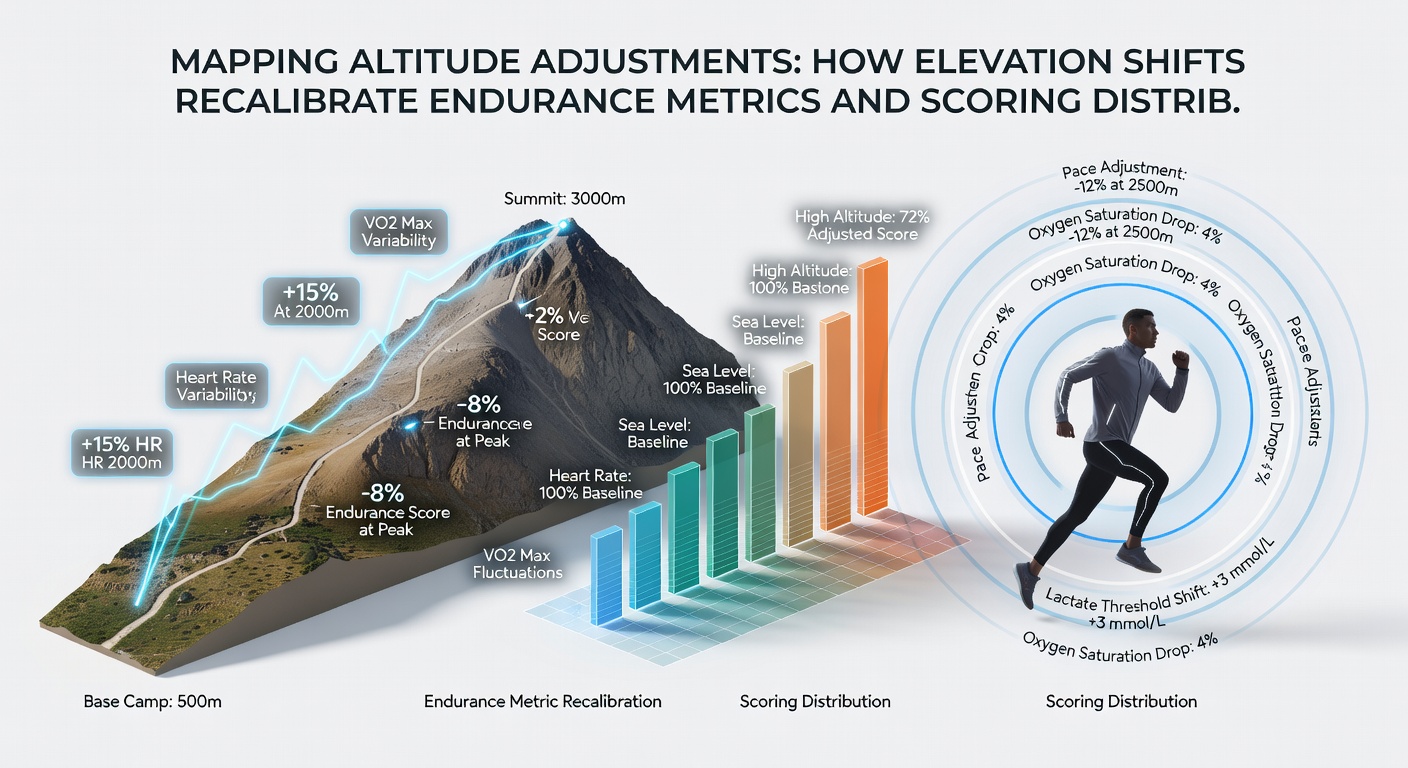
Mountain circuit races compress endurance demands into repeated high-gradient loops that magnify the effects of reduced oxygen saturation. Power-to-weight ratios become decisive on climbs, and data from events such as those held in the Alps and Rockies reveal that riders or runners who fail to recalibrate early pacing often record larger time gaps on subsequent laps. Heart rate drift occurs earlier than at sea level, prompting competitors to target lower percentages of maximum heart rate to sustain output across the full distance. Event organizers have incorporated altitude-adjusted time bonuses in recent years, recognizing that raw finishing times alone do not accurately reflect relative performance when elevation varies between stages.
Comparative Distribution Shifts
When researchers overlay soccer and mountain circuit data sets, parallel recalibrations emerge in both domains. Average speed declines, yet the variance in individual outputs widens because some athletes acclimatize more effectively through prior training camps. In May 2026 several high-profile mountain circuit events are scheduled to coincide with international soccer friendlies at comparable elevations, providing fresh datasets for cross-sport comparisons. These overlapping calendars allow analysts to examine whether teams and racers who employ similar heat and altitude simulation protocols achieve more stable metric distributions than those relying solely on natural acclimatization periods.
Measurement Tools and Recalibration Models
Modern tracking systems combine wearable sensors with environmental data to generate altitude-corrected models that adjust expected endurance thresholds in real time. Software platforms used by professional squads and race teams integrate barometric readings with historical performance logs, producing individualized pacing guidelines that account for both current elevation and days since arrival. Figures from the Canadian Sport Institute reveal that athletes following such personalized recalibration plans maintain closer to baseline lactate profiles throughout competitions, reducing the typical performance decrement observed in unadjusted competitors. These tools also feed into scoring distribution forecasts, helping event statisticians refine projections for goal tallies or stage times under varying altitude conditions.
Conclusion
Altitude continues to reshape endurance metrics and scoring distributions across highland soccer fixtures and mountain circuit races through predictable physiological mechanisms that tracking technologies now quantify with increasing precision. As more events incorporate elevation-specific adjustments and comparative datasets expand, participants gain clearer frameworks for optimizing preparation and in-competition decisions without relying on generalized assumptions.