Phase Shifts in Load Management: Observing How Periodization Protocols in Athletic Preparation Align With Outcome Variations Across League Schedules
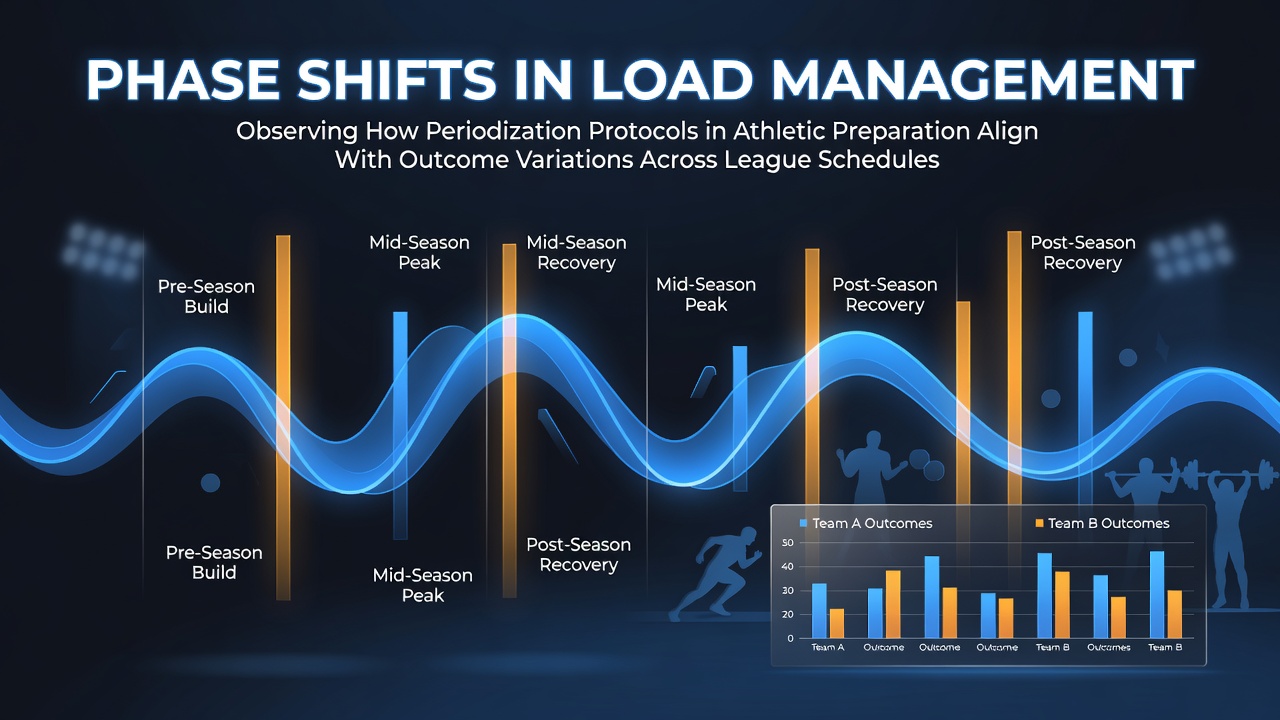
Periodization protocols structure athletic training into distinct phases that alternate between high-load development blocks and recovery intervals, and researchers track how these cycles interact with the fixed calendars of professional leagues. Data from multiple sports show measurable differences in performance metrics when preparation timelines shift relative to competition density, with studies indicating that alignment between planned load peaks and fixture congestion produces variations in both individual output and team results across a season.
Core Elements of Periodization in Modern Training Systems
Coaches divide annual plans into macrocycles that span an entire competitive year, mesocycles lasting several weeks, and microcycles of seven to ten days, and each layer adjusts volume, intensity, and recovery to match physiological demands. Evidence from longitudinal monitoring programs reveals that athletes following these layered structures experience different adaptation rates compared with those on linear progressions, particularly when league schedules introduce irregular rest periods between matches.
Load management tools such as session rating of perceived exertion, heart-rate variability, and GPS-derived external workload metrics allow staff to quantify daily stress, while periodization models use these inputs to modulate upcoming sessions. Observers note that teams implementing data-driven adjustments record fewer spikes in acute-to-chronic workload ratios during condensed fixture periods, a pattern documented across European football leagues and North American basketball schedules.
Alignment With League Calendars and Resulting Outcome Patterns
League schedules impose fixed sequences of home and away games interspersed with international breaks, and periodization planners must map training phases onto these constraints rather than ideal recovery windows. Figures from the 2025-2026 seasons indicate that clubs advancing deep into cup competitions encounter additional midweek fixtures, prompting coaches to compress high-intensity mesocycles into shorter calendar windows. Researchers at the American College of Sports Medicine have documented how such compressions correlate with elevated injury incidence when recovery phases are truncated by more than 20 percent relative to the original plan.
Outcome variations appear most clearly in metrics such as high-speed running distance, sprint frequency, and technical accuracy during the final third of a season. Teams that front-load preparatory load in pre-season blocks often sustain higher physical outputs through March and April, whereas squads that distribute load more evenly across the calendar show steadier but lower peak values in the same period. June 2026 marks the transition point for many northern-hemisphere leagues into off-season or pre-season planning, and analysts compare these planning decisions against the prior campaign's fixture density to refine future alignments.
Sport-Specific Observations Across Different Competition Structures
Football schedules feature dense clusters of three matches in eight days during winter months, and periodization protocols in top European clubs frequently insert short deload microcycles immediately after such blocks. Performance data compiled by domestic federations show that clubs maintaining consistent training-load reductions during these windows preserve higher league-table positions in the subsequent four-week stretch. Basketball calendars, by contrast, distribute games more evenly yet include longer travel demands, and staff adjust periodization to emphasize recovery emphasis on back-to-back game days while preserving skill-acquisition sessions on lighter travel days.
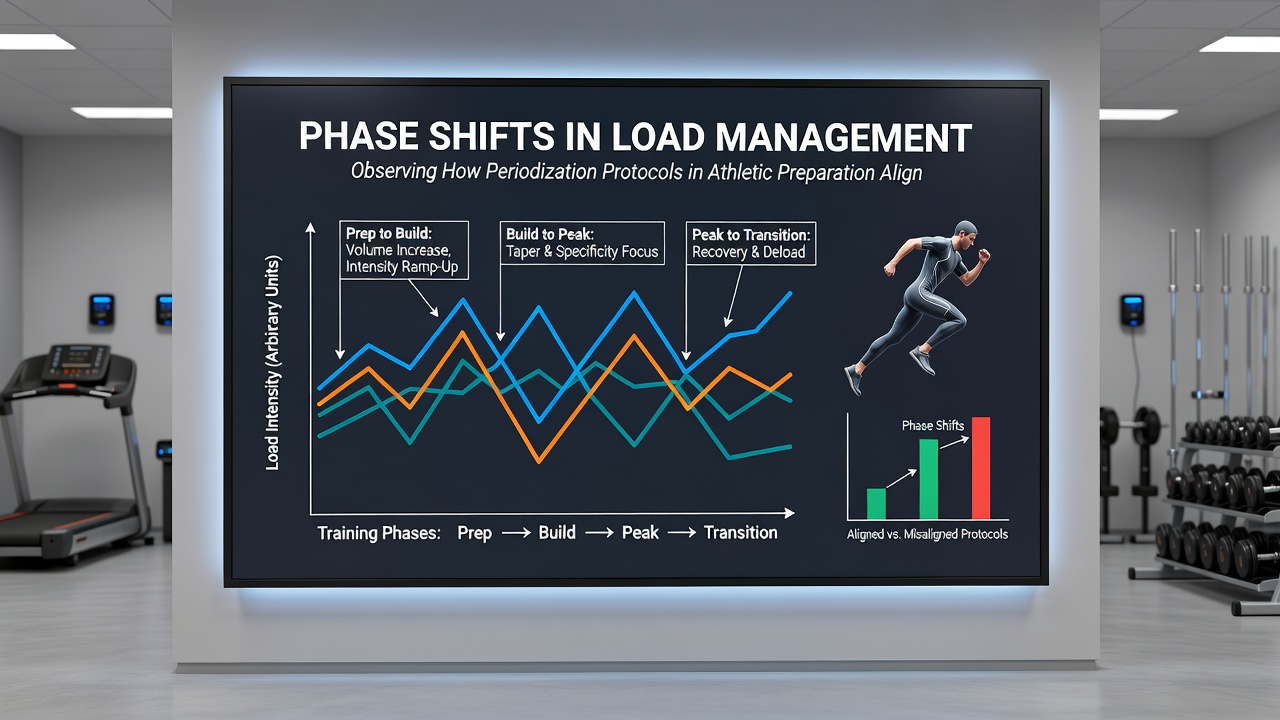
Studies from the Australian Institute of Sport highlight how rugby league teams in the southern hemisphere adapt similar principles to their shorter, more intense seasons, noting that clubs shifting emphasis toward strength maintenance during the middle third of the campaign record fewer soft-tissue injuries in the final six rounds. Across these sports, the common thread remains the synchronization of planned load peaks with periods of lower fixture density, allowing physiological adaptation to occur before the next congested phase arrives.
Monitoring Tools and Data Integration Practices
Modern periodization relies on integrated dashboards that combine internal load markers with external schedule variables, enabling daily recalibration of training content. Teams that incorporate machine-learning models to forecast upcoming fixture congestion demonstrate improved capacity to pre-emptively reduce volume in vulnerable microcycles. Reports from the German Olympic Sports Confederation indicate that such predictive adjustments correlate with lower rates of non-contact injuries during the second half of multi-phase seasons.
Outcome variations also surface in subjective wellness questionnaires and objective neuromuscular fatigue tests administered at standardized intervals. Athletes reporting stable wellness scores throughout congested periods tend to belong to squads whose periodization plans explicitly built tolerance through repeated exposure to high-load weeks earlier in the calendar. These patterns hold across multiple leagues, suggesting that the timing of preparatory load, rather than its absolute volume, drives measurable differences in late-season availability and output.
Conclusion
Periodization protocols continue to evolve in response to increasingly dense league schedules, and the alignment between planned training phases and actual fixture distribution produces observable differences in athlete availability, physical outputs, and competitive outcomes. Monitoring data collected across football, basketball, and rugby contexts confirm that teams adjusting load distribution to match calendar realities maintain more consistent performance profiles through extended seasons. As June 2026 approaches and planning cycles for the subsequent campaign begin, staff examine prior-season workload distributions against results to refine phase timing for future alignment.